

It’s one of the most common conversations that happens in an optometry office. A patient gets their prescription, and somewhere between the exam room and the front desk, the question comes up: glasses or contacts? For some people the answer feels obvious. For others it’s genuinely uncertain they’ve worn one their whole life and wonder if they’re missing out on the other, or they’ve tried contacts and had a bad experience, or they simply don’t know enough about either option to make a confident choice.
The truth is that glasses and contact lenses are not competing products. They’re complementary tools, each with real advantages and real limitations, and the right answer depends entirely on your lifestyle, your eyes, your prescription, and how you want to move through your day. What follows is an honest breakdown of both — the kind your optometrist would walk you through if there were unlimited time in the exam room.
The Case for Glasses
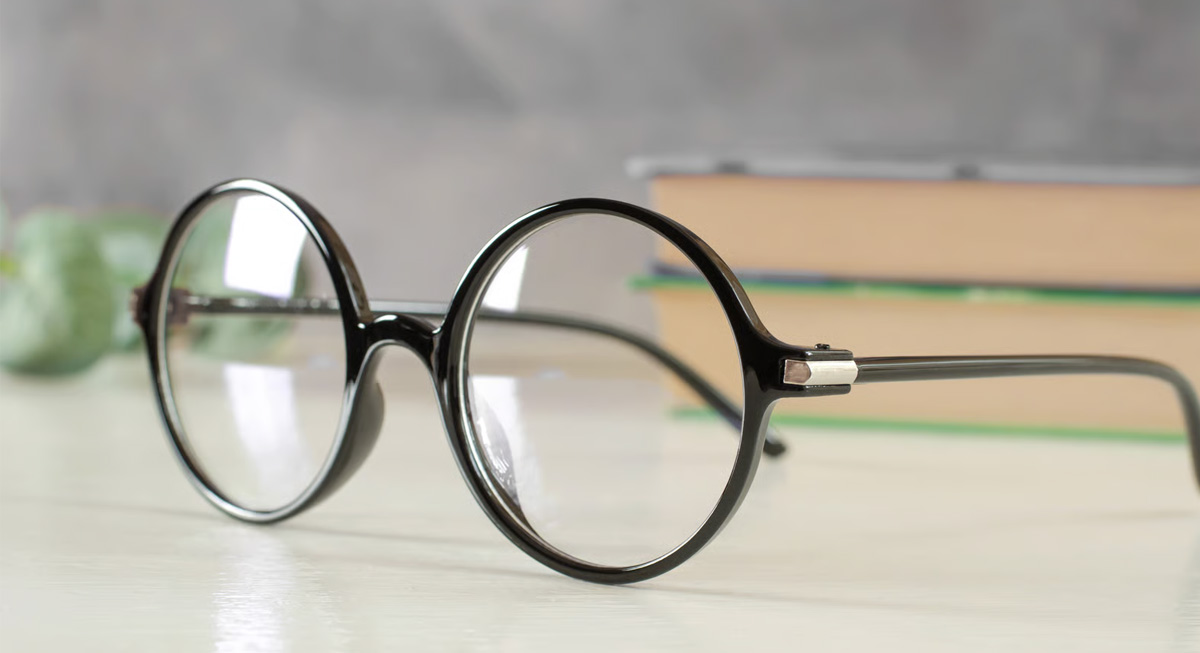
Glasses have come a long way from the thick-framed, distorting lenses of previous generations. Modern optics, combined with a genuinely enormous range of frame styles, have made glasses a legitimate fashion accessory as much as a vision correction tool — and for many people, they’ve become a defining part of their personal aesthetic. But the reasons to wear glasses go well beyond style.
From a pure eye health standpoint, glasses are the lower-maintenance option by a significant margin. You put them on, you take them off, and the surface of your eye is never touched. There’s no cleaning regimen, no replacement schedule, no risk of improper insertion or removal, and no possibility of wearing them too long. For people with dry eye disease which is increasingly common and often aggravated by contact lens wear — glasses can provide meaningful relief simply by keeping the lens off the ocular surface.
Glasses are also more practical than contacts in certain environments. Dusty or smoky conditions, long flights, late nights, and situations where you know you’ll be rubbing your eyes all favor glasses. And for anyone who spends significant hours on screens, glasses with anti-reflective coating and blue light filtering can reduce digital eye strain in ways that contact lenses alone cannot replicate.
The Case for Contact Lenses
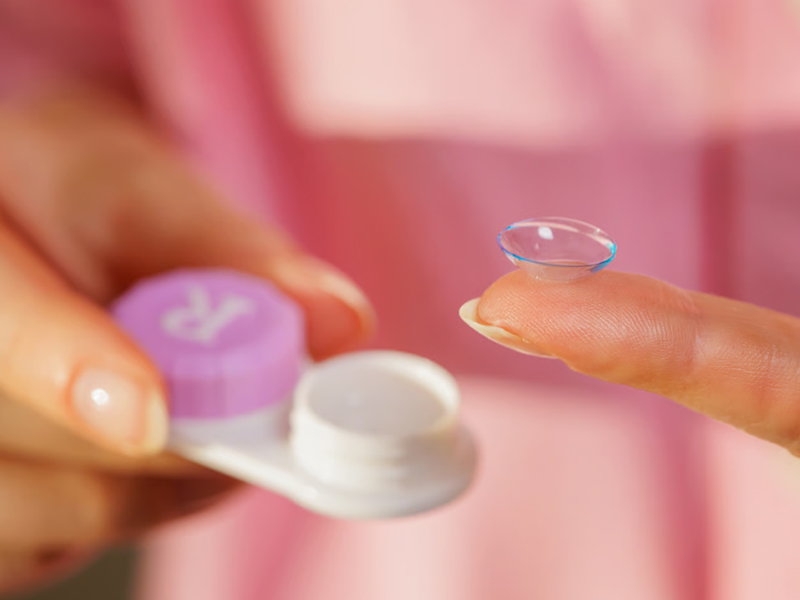
For all the advantages of glasses, there are equally compelling reasons why millions of people prefer contacts — and for active, sport-oriented, or aesthetically motivated wearers, the case is a strong one.
Contacts move with your eye, providing a full, unobstructed field of vision that glasses simply cannot match. There’s no frame blocking peripheral sight, no fogging in cold weather, no sliding down the nose during a workout, and no distortion at the edges of the lens. For athletes, outdoor enthusiasts, or anyone whose daily life involves a lot of physical movement, this difference is significant and immediately noticeable.
Contact lenses also interact differently with your appearance — allowing your face to be fully visible without the visual interruption of frames — which matters to many people for professional, social, or personal reasons. And modern contact lens technology has advanced to the point where lenses that once would have been considered unwearable for certain prescriptions or conditions are now entirely viable options.
Daily disposable lenses in particular have transformed the contact lens experience for people who previously struggled with buildup, discomfort, or the discipline required to maintain a bi-weekly or monthly lens care routine. With dailies, you open a fresh pair every morning and dispose of them every evening. There’s no solution, no case, no accumulation of protein deposits — just consistent, clean comfort each day.
When Your Prescription Changes the Equation
Not all prescriptions are equally well-served by every type of correction, and this is where your optometrist’s guidance becomes particularly important. A few specific situations are worth understanding.
High prescriptions in glasses can produce noticeable lens thickness and some optical distortion toward the edges of the visual field. Contact lenses, sitting directly on the eye, eliminate this entirely — which is why some patients with stronger prescriptions actually see more clearly and comfortably in contacts than in glasses, even after accounting for lens quality.
Astigmatism, which causes blurred or distorted vision at all distances due to an irregularly shaped cornea, was historically difficult to correct with contact lenses. Toric lenses — designed specifically to correct astigmatism — have improved dramatically and are now a comfortable, stable option for most patients with this condition. Presbyopia, the age-related loss of near-focusing ability that typically begins in the mid-forties, can be addressed with multifocal contact lenses that work similarly to progressive glasses, though some patients find the transition takes adjustment.
Keratoconus — a condition where the cornea progressively thins and bulges — may actually be better corrected by specialty contact lenses than by glasses in some stages, because the lens creates a smooth refractive surface over the irregular cornea.
The Honest Conversation About Contact Lens Safety
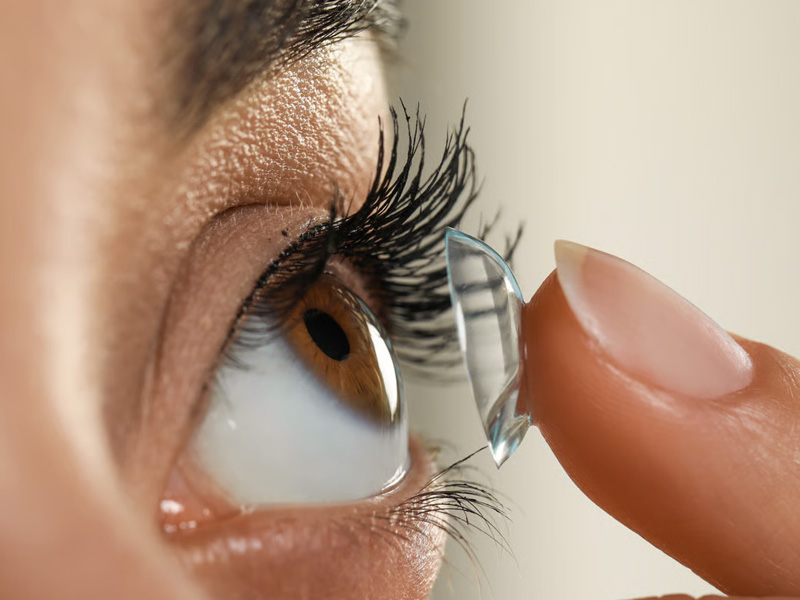
Contact lenses are safe when used correctly. That qualifier matters. The most common problems associated with contact lens wear are almost entirely preventable and almost entirely the result of behaviors that optometrists consistently caution against — sleeping in lenses not approved for overnight wear, wearing lenses beyond their replacement schedule, using tap water anywhere near lenses or cases, and skipping follow-up appointments.
Extended wear without adequate oxygen reaching the cornea can lead to neovascularization — the growth of new blood vessels into the cornea — and over time, reduced tolerance for lens wear. Corneal infections, while uncommon in compliant wearers, can be serious when they do occur and require prompt treatment. The risk isn’t a reason to avoid contacts — it’s a reason to wear them correctly and to maintain a relationship with your optometrist rather than simply ordering lenses online indefinitely without check-ins.
If you’ve had a negative experience with contacts in the past — discomfort, dryness, intolerance — it’s worth revisiting the conversation with your optometrist. Lens materials, designs, and replacement schedules have changed considerably, and what didn’t work five or ten years ago may be entirely different today.
The Answer Most People Don’t Expect
Here’s what many patients don’t realize until their optometrist says it directly: you don’t have to choose. The majority of contact lens wearers also own a pair of glasses, and the healthiest approach to vision correction often involves using both — contacts for active days, workouts, social occasions, and travel, and glasses for mornings, evenings, screen-heavy work sessions, and any time the eyes need a break from lens wear.
Building a wardrobe of both isn’t indulgence — it’s practical, and it’s genuinely better for your eyes long term. Your optometrist can help you identify the right contact lens for your prescription and lifestyle, pair it with a glasses prescription that complements rather than duplicates your correction needs, and set you up with a care routine that keeps your eyes healthy across both modalities.
Hi, this is a comment.
To get started with moderating, editing, and deleting comments, please visit the Comments screen in the dashboard.
Commenter avatars come from Gravatar.